What Am I Good At? A Practical Guide to Finding Your Strengths
If you keep asking, "what am I good at?" you are probably looking for more than a list of random talents. You want evidence you can trust: the tasks that come easily, the skills other people notice, the problems you enjoy solving, and the abilities that could guide your next study, work, or career decision. A good answer combines reflection with feedback and structured information. That is why a tool such as a structured aptitude test library can be useful as one input, especially when you want to compare logical reasoning, numerical skills, technical confidence, and other ability areas without relying only on memory or mood.
What Does "What Am I Good At?" Really Mean?
The question can mean different things depending on where you are in life. A student may be asking which subjects or activities deserve more attention. A career changer may be asking which strengths can transfer into a new role. Someone preparing for interviews may be looking for a clear answer to "what am I good at professionally?" without sounding vague or overconfident.
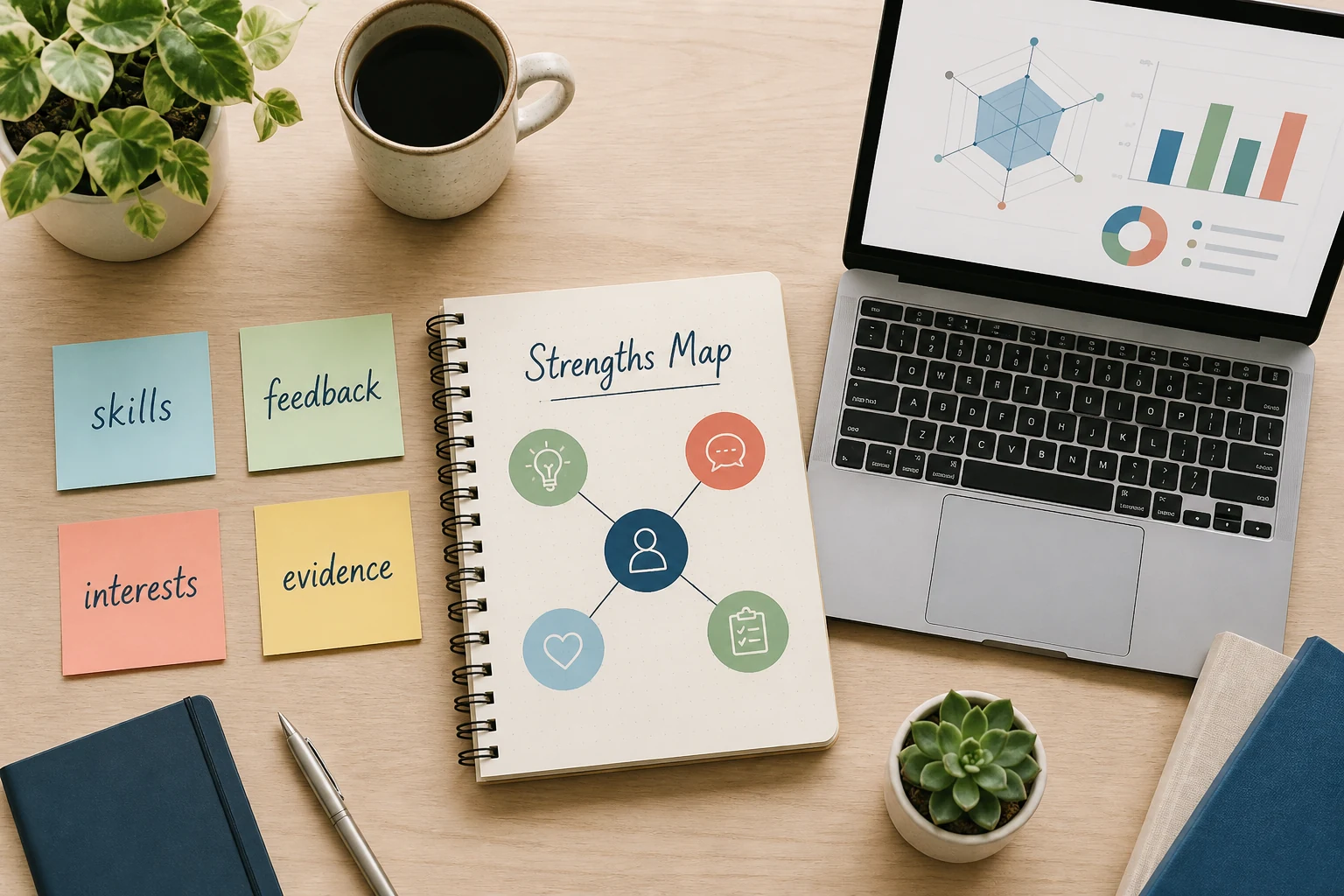
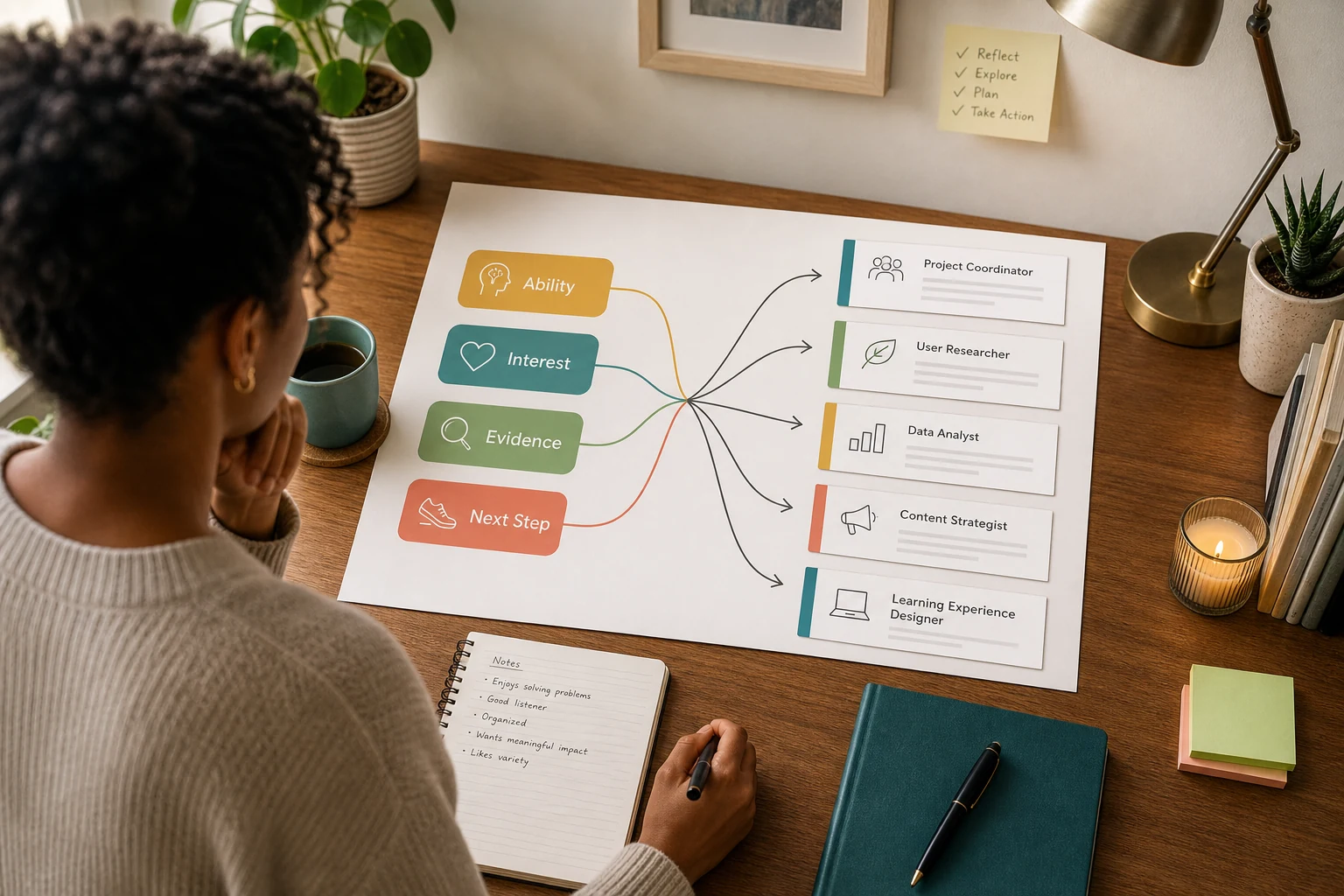
A useful answer usually has four parts:
- Ability: what you can do with practice, accuracy, or speed.
- Interest: what keeps your attention long enough to improve.
- Evidence: results, feedback, patterns, or examples that support the claim.
- Context: the setting where the strength actually matters.
For example, "I am good at communication" is broad. A stronger version is, "I am good at turning messy information into clear next steps for a team." That answer names a skill, shows a work context, and implies evidence. The goal is not to label yourself forever. It is to build a practical strengths map you can test, refine, and use.
Start With Evidence, Not Just Feelings
Feelings matter, but they can be noisy. You might dislike a job and assume you are bad at the work, even if the real problem is the environment. You might feel confident in a hobby because it is low pressure, then overlook the underlying skill that could apply elsewhere. To find what you are good at, collect evidence from several places instead of trusting one source.
Look for patterns in these areas:
- Tasks that people ask you to help with repeatedly.
- Problems you solve faster than people around you.
- Subjects you can explain simply after learning them.
- Activities where practice feels satisfying rather than draining.
- Compliments or feedback you tend to dismiss.
- Results you have achieved in school, work, volunteering, or personal projects.
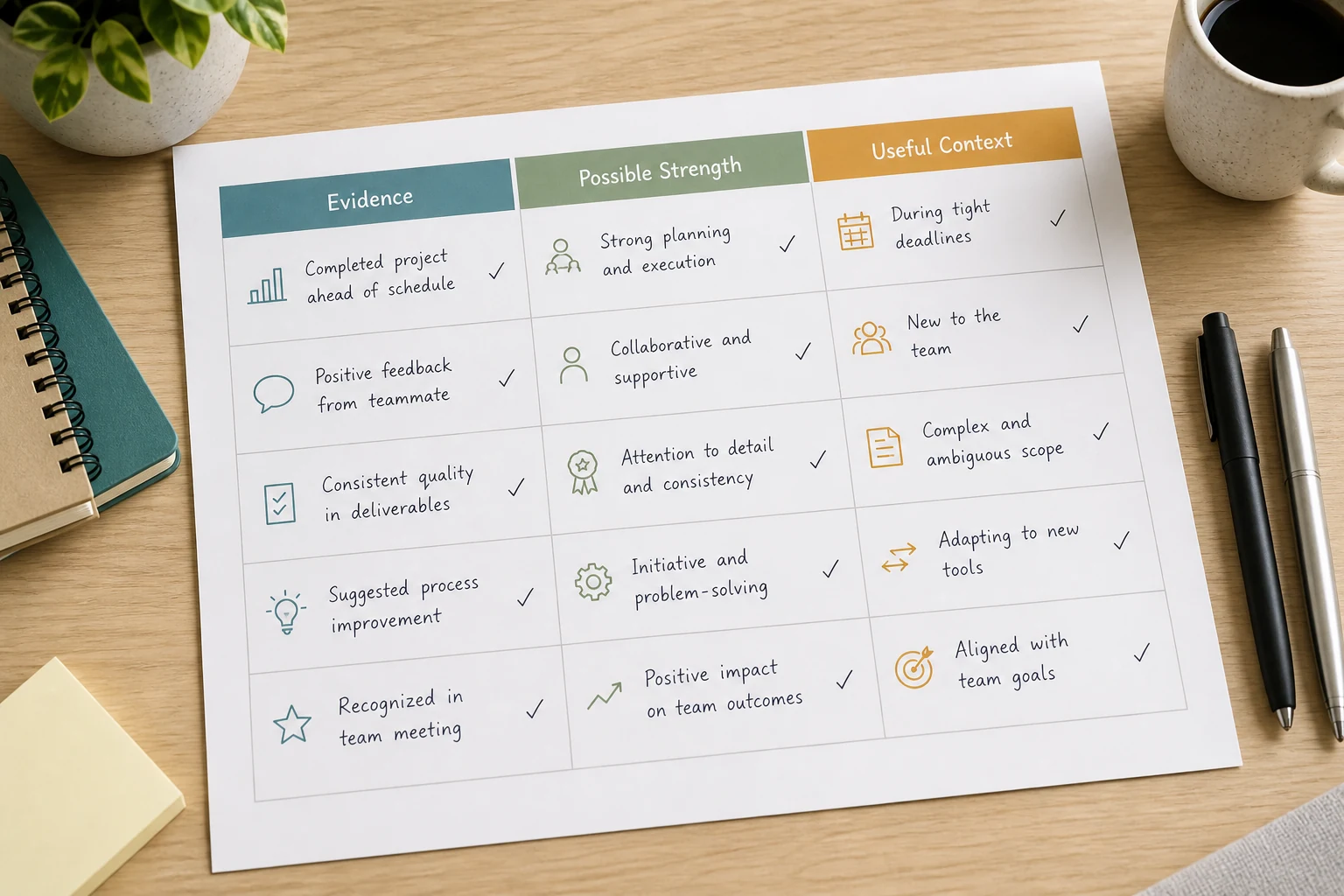
Then separate evidence from interpretation. "My manager asked me to train new hires twice" is evidence. "I must be a natural leader" is an interpretation. The evidence may point to leadership, but it may also point to patience, clarity, process thinking, or domain knowledge. Better answers come from naming the exact behavior.
A simple worksheet can help. Create three columns: evidence, possible strength, and where it could be useful. If the evidence is "friends ask me to review their resumes," possible strengths might include editing, empathy, structure, and career awareness. Useful contexts could include coaching, HR support, writing, advising, or student services.
Build a Skills Inventory You Can Actually Use
When people search for "what am I good at examples," they often want a list. Lists can help, but only if you turn them into personal evidence. Try grouping your skills into categories so the answer becomes easier to scan.
Cognitive and analytical skills include logical reasoning, numerical reasoning, pattern recognition, research, troubleshooting, and decision-making. These matter in roles where you compare options, solve technical problems, interpret data, or improve systems.
Communication skills include writing, explaining, teaching, listening, presenting, persuading, and translating complex ideas for different audiences. These matter in education, sales, management, support, content, community, and many advisory roles.
Practical and technical skills include using tools, building processes, fixing things, coding, designing, measuring, organizing information, and following precise procedures. These can show up in trades, operations, engineering, IT, healthcare support, design, and project work.
People and service skills include empathy, conflict resolution, encouragement, collaboration, mentoring, customer support, and reading group dynamics. These are valuable when a role depends on trust, coordination, or helping others move forward.
Creative and strategic skills include idea generation, storytelling, visual thinking, product sense, planning, experimentation, and seeing unusual connections. These may support marketing, design, entrepreneurship, strategy, teaching, and problem-solving roles.
Once you have a broad list, score each skill from 1 to 5 in three ways: current ability, interest in improving, and evidence level. A skill with high ability but low interest may be useful but not central to your next move. A skill with medium ability, high interest, and strong evidence may be worth developing. This is where career clarity resources can add structure, because aptitude-focused feedback can help you compare strengths that feel hard to judge from memory alone.
How to Know What You Are Good At Professionally
Professional strengths are not always the same as personal talents. You may be good at drawing, gaming, planning trips, calming friends down, or spotting errors in a menu. The professional question is: what is the workplace version of that pattern?
Use this translation process:
- Name the activity: "I organize group trips."
- Identify the behavior: "I compare options, manage details, and keep people informed."
- Translate the skill: planning, coordination, communication, budgeting, and risk management.
- Match the context: operations, project coordination, event planning, customer success, or administrative roles.
If you are preparing an interview answer, keep it specific and evidence-based. Instead of saying, "I am good at solving problems," say, "I am good at breaking vague problems into smaller steps. In my last project, I turned scattered customer complaints into five themes, then helped the team prioritize two fixes." The second answer is more believable because it shows how the skill works.
For students, the same logic applies. "I am good at math" can become "I notice patterns, work carefully under rules, and enjoy problems with clear right-or-wrong feedback." That might point toward analytics, finance, engineering, research, logistics, or technical support, depending on interests and values.
Use Feedback Without Letting It Define You
Other people can notice strengths you overlook, but feedback is still data, not a final verdict. Ask people who have seen you in different settings: classmates, coworkers, supervisors, friends, teammates, clients, or mentors. Give them focused questions so they do not default to generic praise.
Useful questions include:
- What do you think I learn faster than most people?
- When have you seen me do my best work?
- What kind of problem would you naturally bring to me?
- What strength do I underplay?
- What task seems to energize me rather than drain me?
Look for repeated words. If five people describe you as calm, that could point to patience, emotional steadiness, conflict management, careful listening, or crisis response. Ask for examples so you can identify the behavior behind the adjective.
Also watch for feedback that reflects someone else's needs more than your strengths. If everyone says you are "good at handling last-minute chaos," it may mean you are capable under pressure. It may also mean people have relied on you too heavily. A strength is most useful when it supports a sustainable direction, not just when it rescues a bad process.
Try Small Experiments Before Making Big Decisions
A common mistake is trying to answer "what job am I good at?" from thinking alone. Reflection can narrow the field, but small experiments show how a strength behaves in real life. Before making a major study or career decision, test the pattern in low-risk ways.
Try one-week or one-month experiments such as:
- Volunteer for a task that uses the skill you want to test.
- Build a small project, portfolio sample, or practice case.
- Shadow someone in a role that interests you.
- Take a short course and notice which parts feel intuitive.
- Ask for a stretch assignment with clear boundaries.
- Teach a concept to someone else and see where you feel clear.
After each experiment, review three questions: What felt easier than expected? What felt meaningful enough to repeat? What feedback or result did I get? The answer to "what am I good at doing" becomes stronger when it is based on repeated action, not just a personality label.
This also protects you from confusing novelty with fit. A new activity may feel exciting because it is fresh. Another activity may feel awkward at first but improve quickly with practice. Track both enjoyment and improvement speed. Strong directions often sit where ability, interest, and useful demand overlap.
When a Quiz or Test Can Help
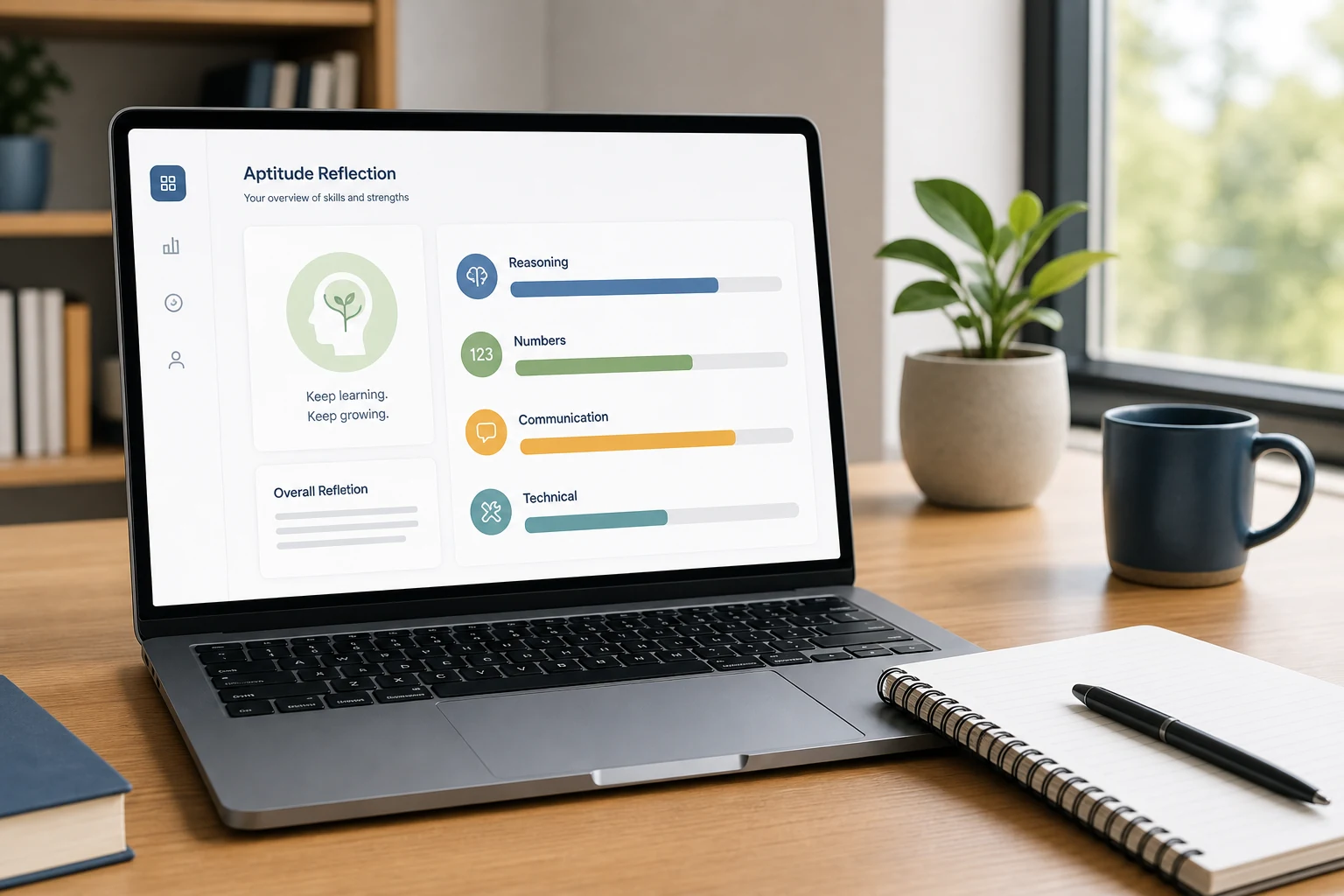
A "what am I good at quiz free" search usually comes from wanting a quick signal. Quizzes and tests can be useful when you treat them as prompts for reflection, not as permanent decisions. A well-designed aptitude test can help you notice ability areas such as reasoning, numerical thinking, verbal analysis, or technical problem-solving. It may also give you vocabulary for strengths you have felt but could not name.
The best use of a quiz or test is comparative. Ask: Which results match my real-world evidence? Which surprise me? Which strengths have I not used enough yet? Which weaker areas are important for my goals, and which are simply not central?
Be careful with any tool that promises a perfect answer or a single ideal job. Career direction depends on values, opportunities, constraints, personality, learning goals, and life context. Aptitude information is one useful piece of the map. It should sit beside feedback, experiments, interests, and practical research.
Turn Your Answer Into a Next-Step Plan
Once you have a few likely strengths, write a short answer you can use in real situations. A good formula is: "I am good at [specific behavior], especially when [context]. I know this because [evidence]. I want to keep using it by [next step]."
Examples:
- I am good at organizing unclear information, especially when a team needs priorities. I know this because I often turn scattered notes into action lists. I want to keep using it in project coordination or operations work.
- I am good at explaining technical ideas in plain language, especially for beginners. I know this because classmates and coworkers ask me to walk them through confusing topics. I want to explore training, documentation, support, or customer education.
- I am good at spotting patterns in numbers, especially when there is a practical decision to make. I know this because I enjoy comparing options and checking assumptions. I want to explore analytics, finance support, logistics, or research tasks.
Before you commit to a path, choose one next action: gather feedback, run a small experiment, compare roles, or review a structured assessment. If you want a more organized starting point, an aptitude testing starting point can help you connect your self-reflection with ability-focused feedback while keeping the decision in your hands.
FAQ
What am I good at examples?
Examples include explaining complex ideas, solving logic problems, organizing details, helping people feel understood, learning software quickly, writing clearly, noticing patterns, planning events, repairing practical issues, designing visuals, teaching beginners, or staying calm during pressure. The best examples include evidence, such as feedback, results, repeated requests for help, or fast improvement.
How do I answer "what am I good at"?
Use a specific behavior plus evidence. For example: "I am good at simplifying confusing information. In group projects, I usually turn scattered ideas into a clear task list." This is stronger than a broad label because it shows how the strength appears in action.
What are things you are good at?
People can be good at analytical tasks, creative work, communication, practical repair, planning, emotional support, leadership, research, learning languages, working with numbers, teaching, design, negotiation, writing, coding, customer service, or building routines. Start with what others ask you for and what you improve at with practice.
What are 10 good skills?
Ten broadly useful skills are problem-solving, communication, critical thinking, organization, adaptability, teamwork, writing, numerical reasoning, digital literacy, and time management. The right skill for you depends on your evidence, interests, and the context where you want to use it.
What if I am not good at anything?
That feeling is common when confidence is low, when work is a poor fit, or when you compare your beginning to someone else's advanced stage. Start smaller: identify tasks you can complete reliably, compliments you ignore, and skills that improve with practice. If the feeling is persistent or affects daily life, consider talking with a qualified professional.
Can a test tell me what job I am good at?
A test can give useful clues, especially about aptitude areas and patterns of performance, but it should not be the only source. Combine test feedback with real examples, values, interests, work environment preferences, and small experiments before making a major decision.