Mastering Aptitude Test Anxiety: Peak Mental Preparation Guide
The silent performance killer that sabotages even the most capable candidates—aptitude test anxiety affects up to 60% of test-takers. It can transform confident professionals into nervous wrecks in a matter of minutes. If you've ever felt your mind go blank during an assessment or worried that nerves would ruin your career chances, you're not alone. How can you stop anxiety from blocking your true potential?
This guide reveals evidence-based psychological strategies designed to help you conquer test anxiety. You'll learn how to develop optimal mental preparation routines and enter your next aptitude test with calm focus. By understanding the science of stress and using practical tools, you can perform at your cognitive peak when it matters most.
Understanding the Psychology Behind Aptitude Test Anxiety
To beat anxiety, you must first understand what it is. Let me be clear: anxiety isn't a sign of weakness. Instead, it’s a biological response to a perceived threat. In the case of an assessment, your brain perceives the "threat" as the potential for failure or the judgment of an employer.
The Science of Test Anxiety: What Happens in Your Brain
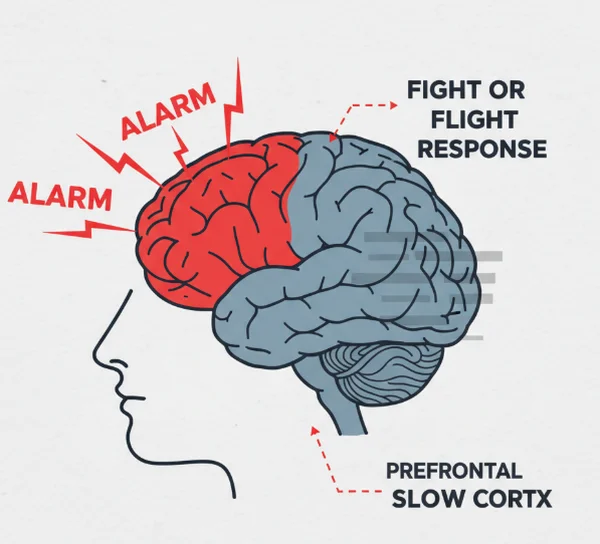
When anxiety strikes, your brain activates its "fight or flight" response. Your amygdala—the emotion center—sends an alarm signal throughout your body. This triggers the release of stress hormones like cortisol and adrenaline. These hormones are great for escaping predators, but they sabotage your ability to solve logic problems.
During high stress, your prefrontal cortex actually slows down. This is the part of the brain used for reasoning and problem-solving. This is why you might struggle to remember basic facts or follow simple instructions during a test. Your brain is simply too busy looking for "danger" to focus on the questions.
Differentiating Between Types of Test Anxiety
Not all test anxiety feels the same. Psychologists usually divide it into two main categories: cognitive and emotional. Cognitive anxiety involves negative thoughts, such as "I’m going to fail" or "Everyone else is faster than me." These thoughts take up valuable "bandwidth" in your working memory.
Emotional anxiety refers to the physical feelings in your body. This includes a racing heart, sweaty palms, or a tight chest. Some people also experience "anticipatory anxiety," which starts days or weeks before the test date. Knowing which type you experience can help you choose the right management strategy.
How Test Anxiety Impacts Cognitive Performance
The biggest problem with anxiety is that it creates "noise" in your mind. Imagine trying to solve a math problem while someone is shouting in your ear. That's exactly what cognitive anxiety does. It uses up the mental energy you need for the test.
Worry consumes your working memory, slowing you down and increasing careless mistakes. This creates a vicious cycle: you make an error → you grow more anxious → your performance suffers further. Breaking this cycle is crucial for success on any online assessment.
Evidence-Based Strategies for Immediate Anxiety Reduction
Here’s the thing—you don’t need months of therapy to lower your stress levels. There are several "in-the-moment" techniques that can calm your nervous system in seconds. These are essential tools to use right before the timer starts.
Breathing Techniques to Regain Focus Under Pressure
Deep breathing is the fastest way to "hack" your nervous system. When you breathe deeply and slowly, you send a signal to your brain that you're safe. One of the most effective methods is "Box Breathing."
To practice this, follow four simple steps:
- Inhale through your nose for 4 seconds.
- Hold your breath for 4 seconds.
- Exhale through your mouth for 4 seconds.
- Hold your empty lungs for 4 seconds.
Repeating this cycle three or four times can significantly lower your heart rate. It clears your mind and restores your focus.
Cognitive Reframing: Changing Your Test Narrative
How you label your feelings matters. Research shows that people who tell themselves "I am excited" instead of "I am nervous" actually perform better. This is called cognitive reframing.
Both excitement and nervousness feel similar in the body, involving a racing heart and high energy. By reframing the feeling as excitement, you view the test as a challenge to meet rather than a threat to avoid. Instead of thinking "This test is a trap," try thinking "This test is my chance to show what I can do."
Physical Techniques to Release Tension and Improve Performance
Stress often hides in your muscles. You might be clenching your jaw or hunching your shoulders without even realizing it. Use the "Progressive Muscle Relaxation" technique to release this tension.
Start at your toes and squeeze the muscles as hard as you can for five seconds, then release. Move up to your calves, thighs, stomach, and hands. By the time you reach your face and neck, your body will feel much heavier and more relaxed. This physical release tells your brain that the "danger" has passed, allowing you to focus on your practice tests with a clear head.
Building Long-Term Mental Resilience for Aptitude Testing
While immediate tips are helpful, long-term preparation is the best way to prevent anxiety from starting. Resilience is like a muscle; you can build it over time with the right habits. It's about creating a foundation of confidence that doesn't crumble under pressure.
Progressive Exposure: The Gradual Desensitization Method
One of the main reasons we feel anxious is the "fear of the unknown." You can reduce this fear through progressive exposure. This means gradually introducing yourself to the testing environment in small, manageable steps.
Start by looking at sample questions without a timer. Once you feel comfortable, try a short 5-minute quiz. Finally, take a full-length, timed free assessment. By the time you take the real test, your brain will recognize the situation as "normal" rather than "scary."
Creating Your Personalized Mental Preparation Routine
Top athletes never walk onto the field without a warm-up. You should have a mental warm-up routine for your brain. Keep this routine identical every time you practice so it becomes a habit.
Your routine might include:
- Five minutes of deep breathing.
- Drinking a glass of water.
- Saying a positive mantra, such as "I am prepared and focused."
- Organizing your desk space.
A consistent routine acts as a psychological "trigger." It tells your brain that it's time to perform.
The Role of Sleep, Nutrition, and Exercise in Test Performance
Your brain is a physical organ. If your body is tired or poorly fueled, your anxiety will be higher. Sleep deprivation increases the activity of the amygdala, making you more reactive to stress. Aim for 7–9 hours of sleep before any major assessment.
Nutrition also plays a vital role. Avoid excessive caffeine, which can mimic the symptoms of a panic attack like jittery hands and a racing heart. Instead, eat a balanced meal with slow-release energy, like oats or whole grains. Regular exercise also helps by burning off excess cortisol, keeping your baseline stress levels lower.
Advanced Psychological Techniques for Peak Cognitive Performance
Ready to take your prep to the next level? If you want to move beyond just "surviving" a test and start "thriving," you can use the same techniques as world-class performers and CEOs.
Visualization and Mental Rehearsal for Test Success
Visualization involves closing your eyes and imagining the entire testing process in vivid detail. Don't just imagine the final result; imagine the process. See yourself sitting at the computer, feeling calm, and clicking through the answers confidently.
Imagine yourself encountering a difficult question. Instead of panicking, visualize yourself taking a deep breath, skipping the question, and returning to it later with a cool head. This mental rehearsal builds "neural pathways" that make the actual experience feel like a repeat performance.
Developing a Growth Mindset for Aptitude Testing
People with a "fixed mindset" believe their intelligence is set in stone. They view a low test score as proof that they're "not smart." This perspective creates massive anxiety.
In contrast, a "growth mindset" sees the aptitude test as a snapshot of current skills that can be improved. If you view the test as a tool for learning and self-discovery, the pressure to be perfect disappears. You can use the AI-powered reports from professional platforms to identify your specific strengths and areas for growth.
Implementing Positive Self-Talk to Counter Negative Thoughts
We all have an inner critic. During a test, that critic might say, "You’re running out of time" or "You’ll never get this job." You must actively counter these thoughts with positive, factual statements.
When a negative thought arises, stop and replace it immediately:
- Negative: "I'm so slow at math."
- Positive: "I am careful and accurate. I will get the points for the questions I answer."
This isn't just "happy thinking"—it’s a tactical way to keep your prefrontal cortex online and functioning.
Taking Control of Your Aptitude Testing Experience
Test anxiety doesn't have to define your career prospects. When you understand what's happening in your brain and arm yourself with the right techniques, you can transform anxiety into focus. The mental strategies in this guide aren't just theory—they're practical tools that work when implemented consistently.
You have the power to turn "test day" into a showcase of your true potential. The best way to start is by practicing in a safe, scientifically-backed environment. Use our online tool to familiarize yourself with the process and receive detailed AI insights that help you understand your unique cognitive profile. Take the first step today and turn your anxiety into your greatest competitive advantage.
The Takeaway
Can you really overcome test anxiety completely?
While it's rare to feel zero stress, you can absolutely learn to manage it so that it no longer affects your score. Most successful people still feel "butterflies" in their stomach; they've simply learned how to make those butterflies fly in formation. Regular practice on a test platform helps build the confidence needed to keep anxiety at a functional level.
How far in advance should I start mental preparation for important aptitude tests?
Ideally, you should start at least two weeks before the test date. This gives you enough time to practice progressive exposure and build a consistent routine. However, even starting a few days early with breathing techniques and visualization can make a significant difference.
Are there any supplements that can help reduce test anxiety?
You should always consult a doctor before taking supplements. However, many people find that natural options like Magnesium or L-Theanine can have a calming effect without making you feel sleepy. Avoid trying any new supplement for the first time on the day of your actual test.
What should I do if my anxiety spikes during the actual test?
If you feel a spike of panic, use the "5-4-3-2-1" grounding technique. Stop for 30 seconds and identify:
- 5 things you can see.
- 4 things you can touch.
- 3 things you can hear.
- 2 things you can smell.
- 1 thing you can taste.
This forces your brain to reconnect with reality and disconnect from the perceived "threat" of the test.
How do I know which anxiety reduction techniques will work best for me?
Everyone is different. The best way to find out is to start your test in a practice setting and try a different technique each time. Notice which ones make you feel more focused and which ones help you stay calm when the timer gets low. Personalization is the key to reaching a peak mental state.