Aptitude Test Results: Interpret Your Score & Unlock Meaning
You’ve just completed an aptitude test. The results are in, and you’re looking at a screen filled with scores, charts, and percentiles. It’s a significant first step toward self-discovery, but what does it all mean? Staring at raw data can feel more confusing than enlightening. If you're wondering, what do my aptitude test results really say about your potential?, you're in the right place.
Understanding your aptitude test results is about more than just seeing a number; it’s about translating that data into a meaningful story about your unique strengths and abilities. This guide will help you decode your scores, understand their significance, and show you how to move beyond basic numbers to unlock truly personalized insights for your career journey. Ready to discover your potential? You can start by taking a free career test on our platform.

Understanding Your Aptitude Test Results: The Basics
Before diving into specific scores, it’s essential to grasp two fundamental concepts that form the bedrock of any reliable aptitude assessment. Think of this as learning the language of your results.
Raw Scores vs. Percentile Ranks: What's the Difference?
At first glance, you might see a "raw score," which is simply the number of questions you answered correctly. While straightforward, a raw score of 30 out of 40 doesn’t tell you much on its own. Was the test easy or difficult? How did others perform?
This is where the percentile rank becomes crucial. A percentile rank compares your performance to a "norm group"—a representative sample of people who have taken the same test. If you score in the 85th percentile, it means you performed better than 85% of the people in that group. It's not a grade; it's a ranking. This context is vital for understanding your performance in a meaningful way.
What Does an Aptitude Test Measure?
Unlike an achievement test that measures what you've already learned (like a history exam), an aptitude test is designed to measure your innate potential or your capacity to learn new skills. It assesses your core cognitive abilities. These typically include:
- Numerical Reasoning: Your ability to work with numbers, interpret data, and solve mathematical problems.
- Verbal Reasoning: Your capacity to understand and analyze written information and draw logical conclusions.
- Logical & Abstract Reasoning: Your skill in identifying patterns, solving complex problems, and thinking strategically.
- Spatial Reasoning: Your ability to visualize and manipulate two-dimensional and three-dimensional shapes.
Each of these aptitudes points toward a different set of natural talents that can be applied across various careers. An online aptitude test is your first step to identifying them.

Deciphering Your Aptitude Test Score Meaning by Category
Your overall score is just the headline. The real story is in the details of each category. Here’s how to interpret the meaning behind your performance in common aptitude test sections.
Interpreting Numerical Reasoning Scores
A high score here suggests a strong ability to handle quantitative data. You are likely comfortable with numbers, charts, and logical sequences. This points to a natural fit for careers in finance, engineering, data analysis, accounting, and scientific research. A lower score doesn’t mean you’re "bad at math"; it may simply indicate that your strengths lie in more qualitative or creative fields.
Understanding Verbal Reasoning Performance
Strong verbal reasoning scores indicate excellent comprehension, a rich vocabulary, and the ability to grasp complex arguments from text. This is a cornerstone of success in fields like law, journalism, marketing, communications, and education. You can likely articulate ideas clearly and persuasively, making you a valuable asset in roles that require strong communication skills.
Logical & Abstract Reasoning: What Your Results Say
If you excelled in this area, you are a natural problem-solver. You can see the big picture, identify hidden patterns, and devise innovative solutions. This skill assessment is highly valued in strategic planning, software development, project management, and any role that involves troubleshooting complex systems. Your mind is wired to bring order to chaos and find elegant solutions.
Other Key Aptitudes: Mechanical, Spatial, and More
Some tests also measure other specific aptitudes. A high score in mechanical reasoning is a strong indicator for careers in engineering or skilled trades. Strong spatial reasoning is crucial for architects, designers, and pilots. Understanding these niche strengths can open doors to careers you may have never considered. Explore your unique talents with a career assessment test.

What is a Good Aptitude Score? Context is Key
This is one of the most common questions, and the answer is refreshingly simple: it depends entirely on the context. There is no magic number that defines success or failure.
Is There a Universal "Good" Score?
Absolutely not. A "good" score is relative to the specific requirements of a job or industry. For example, a top-tier investment bank will expect exceptionally high numerical reasoning scores, while a creative advertising agency may prioritize abstract and verbal reasoning. Your score is not a judgment of your overall intelligence but a measure of your alignment with a particular role's demands.
Benchmarking Your Results Against Industry Standards
Employers use aptitude tests to create a benchmark. They analyze the scores of their top-performing employees to establish a target range for new hires. When you take a pre-employment aptitude test, your score is compared against this benchmark. This is why a score that might seem average could be excellent for one role but insufficient for another. The goal is to find the right fit, and a job aptitude test helps both you and the employer do just that.
Interpreting Your Aptitude Test for Career & Growth
Your test results are not a final verdict. They are a starting point—a map that can guide your personal and professional development. Here’s how to use your scores for meaningful growth.
Leveraging Strengths for Career Choices and Development
Your highest scores are powerful signposts. They highlight your natural talents and point you toward career paths where you are most likely to excel and feel fulfilled. If you have a high logical reasoning score, consider exploring courses in coding or data science. If your verbal skills are top-notch, look into public speaking or content creation. Use your strengths as a compass to guide your career development.
Addressing Areas for Improvement: A Growth Mindset
It can be disheartening to see a low score in a particular area, but it’s crucial to view it as an opportunity, not a limitation. A lower score simply identifies an area where you have the potential to grow. It highlights skills that may require more conscious effort to develop. This knowledge is power—it allows you to seek out targeted training, practice, and resources to build a more well-rounded skill set.
Beyond the Numbers: The Value of Deeper AI-Powered Insights
A standard score report gives you the "what." It tells you how you performed. But it often misses the "why" and, more importantly, the "what's next?" This is where technology can unlock a deeper level of understanding.
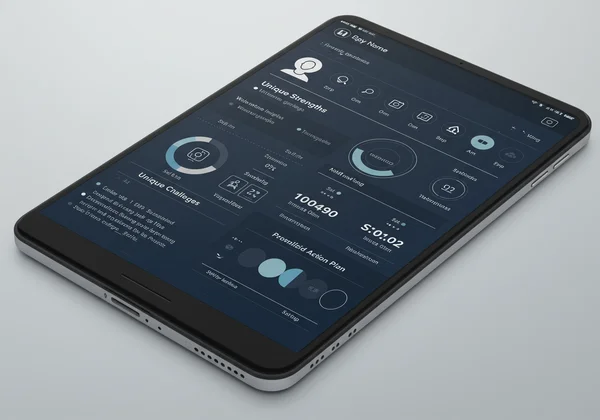
On our platform, we believe a score is just the beginning. Our platform uses advanced AI to analyze your results and generate a detailed, personalized report that goes far beyond percentiles. This report provides actionable advice by:
- Identifying Your Unique Strengths: It articulates precisely what your high scores mean in practical terms.
- Highlighting Potential Challenges: It explains how your weaker areas might manifest in the workplace and offers strategies to manage them.
- Providing a Personalized Action Plan: It offers concrete steps for career growth, skill development, and leveraging your natural talents.
This is the difference between a simple score and true insight. Don't just settle for a number; unlock your potential with a comprehensive analysis.
Turning Your Score into a Success Story
Your aptitude test results are a valuable tool for self-reflection and career planning. By understanding the difference between raw scores and percentiles, interpreting each category, and putting your scores into the right context, you can transform confusing data into a clear roadmap for your future.
Remember, your results are not a label. They are a guide. They highlight your innate strengths and illuminate pathways for growth. The most crucial step is what you do with this newfound knowledge.
Are you ready to move beyond the score and discover what you’re truly capable of? Visit AptitudeTest.me to take a free aptitude test and unlock a detailed AI-powered report that provides the personalized insights you need to build a successful and fulfilling career.
Frequently Asked Questions About Aptitude Test Results
How can an aptitude test help my career?
An aptitude test helps your career by providing objective insights into your natural strengths and areas for development. This self-awareness allows you to make more informed decisions about your career path, identify jobs where you'll naturally excel, and focus your professional development efforts more effectively. It’s a powerful tool for aligning your career with your inherent talents.
Why do I struggle with aptitude tests, even with good scores in some areas?
It's very common to have a spiky profile, with high scores in some areas and lower scores in others. This simply reflects that everyone has a unique combination of cognitive strengths. Struggling in one area, like numerical reasoning, doesn't diminish your strengths in another, like verbal or creative thinking. Understanding this profile can help you find roles that play to your strengths. You can discover your profile on our platform.
Is an aptitude test like an IQ test?
While there is some overlap, they are not the same. An IQ test aims to measure a general intelligence factor ("g"). An aptitude test is more practical and multifaceted, measuring specific abilities (e.g., numerical, verbal, spatial) to predict your potential to succeed in various tasks or jobs. Think of it as a practical application of intelligence assessment for career guidance.
What happens if I receive a low aptitude test score?
A low score is not a reflection of your worth or intelligence. It is simply data. First, consider the context—was it for a role you weren't truly interested in? A low score is an opportunity to either develop that skill through practice or, more powerfully, to recognize that your talents lie elsewhere. It can redirect you toward a career path that is a much better fit for your natural abilities. Take a free aptitude test to get a clearer picture of where your true talents are.